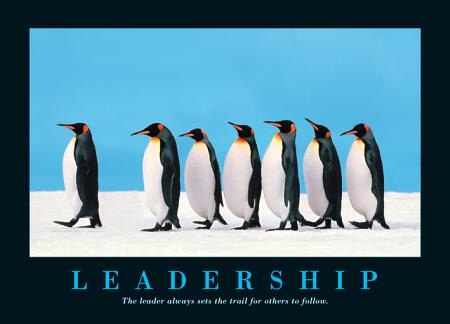
Trying to pick a leadership style can be challenging, because I think people ebb and flow between a few at different times. “Creating a climate hospitable to education in order that safety, a cooperative spirit, and other foundations of fruitful interaction prevail;”
“ Principals ensure that teachers do not work in isolation from one another, but work collaboratively, giving each other help and guidance to improve instructional practices” (Louis et al., 2010, p. 50).
Having teachers working together, communicating about their strengths and weaknesses will hopefully engage an environment of exceptional learning. A feeling of safety and knowing procedure, having structure makes me feel safe and less stress. I know this is not true of everyone, but this is how I function the best, and how I can be a successful leader. I would do my best to engage all departments to the best of my ability, and recognize areas that need strengthening.
Looking at what
encompasses a good leader involves many different components. During this
course there were many opportunities through readings, discussions, and
processing that allowed for considerable evaluation of what a strong leader
looks like. There are many different types of leaders and no single person will
have the same leadership style. The goal is to self-reflect, learn from others,
and continually work on yourself personally and professionally.
Having a building leader with the skills that
are beneficial to the building is a great success. No one wants a leader that
has coercive qualities. A leader that demands compliance is a leader that will
have acts of rebellion in a building or district. This type of leadership does
not mesh well with most people and is not beneficial for an educational
learning environment.
As it stands now, I relate more with the authoritative
leader that has a “positive impact on climate performance”. “Authoritative
leaders need to recognize the weaknesses as well as the strengths in their
approach” (Fullan, 2001, p. 39). This style of leadership works better in an
educational setting. It allows people to feel as if there is direction, and
trust. Teachers and staff want to be able to trust their administrators.
A third leadership
style that I would like to discuss would be an affliative leadership style. I
have said that I believe I am both an authoritative leader as well as an
affliative at times. Which rang very true as I was reading the previously cited
book; “Leading in a Culture of Change”.
It states “Pacesetters and coercers are terrible listeners. Authoritative
leaders are not that good at listening either. Affiliative and democratic
leaders listen too much. This is why leadership is complicated” (Fullan, 2001, p. 42) In self-reflection,
I have stated that I need to work on my listening skills and that I am very
empathetic.
#11
In Education is there a difference between a manager and a leader? I think as an educator we take on both roles, and more. I have to manage a classroom with supplies, and changing things on a dime, or taking a risk, to make my students education more worthwhile. I have to lead my students to become better artists. I lead them to think creatively and not just "play school". I break up fights, I give a kid a dollar if he/she doesn't have enough for lunch, I care.
As a leader of a building... as a principal, I think, must do this as well, its just with adults added in. Supplies, grounds, teachers, doing what's best for the building as a whole, managing temperaments, parents, students... the list goes on....Superintendent....add more buildings on top of that with more teachers, and students, and parents.
Be a good leader. Be someone that can be trusted. Be someone that develops relationships.
When is it managing? When is it leadership? Who knows...maybe they all blend together. I'm not quite convinced yet.
Is a Principal/Supt. of a school like a CEO of a company?
#12
Daniel Pink
Such a cool dude.
Motivation
http://www.danpink.com/about/
What is the ideal leader? What do they have to do? Say? Become? Is it situational? Or, are you a BORN leader? I read a journal article for this class, from the Ivey Business Journal written by Mitch McCrimmon.
According to Mitch McCrmmon:
”The ideal leader has vision, charisma, integrity, emotional intelligence, an inspiring delivery and sterling character. But if there are leaders who don’t fit this image, then we cannot use our ideal to define leadership in general”.
Here are some leaders who don’t match our ideal:
The teenage gang leader who has “street cred”, is tough and prepared to defy the law, even if it means shooting his way out of trouble.
Stalin, admired by some Russians who like tough leaders, even if ruthless.
Technical leaders, whose new product ideas induce change even if they have no vision, an abrasive style and little emotional intelligence.
Leaders in scientific or professional functions who exert quiet influence based on hard evidence but who are personally uninspiring.
Why we are in love with the notion of the ideal leader.
We will follow as long as the leader seems to know what they are doing
They fill a need:
(1) a need for a dream, a cause or purpose to believe in, give our lives meaning,
(2) a need to belong, to be part of something, a group with which we can identify
(3) a need to calm our fear that we will fail or be rejected, feelings that generate dependency.
Why providing direction is the real essence of leadership
Would we follow a charismatic leader with no idea where to go or how to get there? Conversely, if we were certain that a leader could get us to a desirable destination, the lack of charisma, character and emotional intelligence would not matter.
Suppose you were pursuing an escaped convict in a remote forest. After apprehending him, you discover that you are lost and your mobile phone is out of range. Now, if your convict knows the way out of the forest, would you would follow him? The only essential requirement in crunch situations is for the leader to know where to go and how to get there.
The ability to provide directionis critical.
If you were in a theatre that suddenly caught fire, who would you listen to, the charismatic figure who leaps onto the stage and tells you not to panic or the uninspiring fireman who appears in a doorway and calls out: “This way”?
Why direction today can come from anywhere
Direction is constantly changing and shifting. “So-called Learning organizations learn by experimenting with new products and services, only deciding what direction to pursue based on what works. Direction in fast changing contexts can only be discovered through trial and error rather than definitively set in advance.”
Mitch didn't seem to be on board with learning organizations, he called them "so-Called", I need to dig deeper into his background. His career started in Canada, and then he moved to the UK. I wonder if he believes this of all learning organizations or just the Canadian and UK organizations he has come in contact with. What is his opinion on education in the U.S.?
Why leadership must be discrete acts of influence :
Management vs. Leadership
From Statics to Dynamics
Mitch’s discussion shifted from a “person to a process” Now, we can talk about style rather than content.
Mitch says: It is time to give up the myth of the ideal leader. Leadership is not a role or type of person.
Whither our dreams?
Mitch talks about leadership in business, and not much about education, but they can relate. Leadership is leadership, and can be put in any situation.
He makes an interesting point that leadership is an “influence process” and to be consistent we should focus on that process, and forget about the person showing it.
“Anyone with a better idea can influence change. Leadership is now a discrete act of influence that is independent of a role, or any character or personality traits.
What kind of leader am I? I guess that's what I'm trying to figure out. Or maybe I can lead by example and my students will take on the role of leader...situational leader...The ideal leader #10 Below is the website where I obtained some background information on Mitch. http://ellislocke.com/about-us/associates-alliances/mitch-mccrimmon-phd-ba-ma-associate/
Mitch McCrimmon, Ph.D., B.A., M.A. Associate
Mitch McCrimmon specializes in management assessment at all levels, executive coaching and career transition counselling. He has worked as an HR consultant for 25 years with 10 previous years in various HR roles. His HR consulting career started in Canada with KPMG before moving to the UK to join PA Consulting Group in 1989.
Mitch has designed assessment centres for leadership assessment and succession planning across a range of private and public sector organizations but he uses a range of personality questionnaires and reasoning tests as well. He worked as an associate coach in the leadership development program of Ashridge Business School in the UK from 2001 to 2006 before returning to Canada.
Mitch obtained a B.A. in Psychology and M.A. in Philosophy from the University of Manitoba and a Ph.D. in Philosophy from the University of Western Ontario. He is a Chartered Psychologist within the British Psychological Society. He writes extensively on leadership and related topics with articles published in the Ivey Business Journal, The Canadian Manager and Management Issues among other publications.
#7 How hard have you worked on yourself in comparison to your job? I believe that working on yourself, and working hard at your job goes hand in hand to create a positive learning environment as well as being a confident, and successful individual. It is a true statement for me,to say that if you are not happy, others that are in your charge cannot learn from you at their full potential, nor can you be a leader at your true potential. Having a clear understanding your own strengths and weaknesses is an on-going learning process that requires continual thorough self-evaluation and reflection. When in a leadership role this self-awareness is even more important, and there are many qualities that a successful, strong leader must possess. One key quality that I believe represents an effective leader is being organized and positive. I have to work on being organized every day. Having a positive attitude and creating an engaged and creative working environment can help motivate staff to have the same effect on their students and with each other. Having a creative outlook has helped me in all facets of my life, including my ability to work effectively with students, staff, and parents. This is true as well as in my own personal educational path. Creativity fuels me. As a leader it is my job to create this organized and creative environment for the students or future teachers I am leading. Being in the teaching profession for 15 years and counting, I can say that I have started to work on myself much more in the past 5 years, than I ever have before. I might be able to say that I owe this intense self improvement to my daughter, who is now 5 years old. I knew it was important to keep improving myself for her, as well as improving my teaching. My suggestions for others would be:
Find your voice
Know your limits, but strive to surpass them
See situations from other views than your own
Never stop learning
Challenge yourself
#8
"Risk"
-Wikipedia says:
Riskis the potential of losing something of value. Values (such as physical health, social status, emotional well being or financial wealth) can be gained or lost whentaking riskresulting from a given action, activity and/or inaction, foreseen or unforeseen.
I took a quiz online to see If I take risks or not. It said I do not.
I'm not sure If I believe this.
I think I take risks everyday. I may not take risks in the stock market, or jump out of airplanes, and you might think that I'm underwhelmingly boring in my risk taking, but they are risks none the less.
I get in my car everyday, I eat strange foods, I change a lesson plan in a matter of milliseconds because there is a fire drill, or someone pukes, it's a nice day outside, and I want to change the learning environment, I'm around art materials.
Risks happen in a school lock-down, a fight, or a school wide RTI assignment that I may or may not have forgotten about. All these things are risks. All these scenarios could fail miserably, and then I have to take another risk to try to remedy the situation.
In education and being a leader in the classroom or the building, you must take a certain amount of risk. People take risks. Small or large.
I've been reading The Jossey-Bass Reader on Educational Leadership and his is my take on Chapter 17 "Risk".
by Michael Fullan
The anxiety that students go through before they ask their teacher to take a risk, or a teacher asking their principal, and principal asking their superintendent is the same “little dance” for all. To get permission to take that risk, is usually met with worried look, then, questioning,and finally the stall hoping it might go away. However the student, teacher, or principal that hasn’t forgotten is the one who takes that risk to fight for what they want.This chapter talks about how people take risks.
It seems like a lot of work to want more from education when we are met with roadblocks. Nobody wants to look foolish or fail, so our culture is to be very cautious.We all wish for the response of “Let’s do it! Can I come along? If it doesn’t work out we’ll share the responsibility.”(pg, 289)
We have to try to be OK with being able to say “I failed, but I learned something, and I will do better next time.” Or Being able to say “I don’t know.”
There is growth in failure.”The educator who wishes to build a school culture in which risk taking is prominent can exercise no greater influence than by taking risks himself.”(pg. 293)
When incorporating change, one must not do it radically, or your ideas could implode. Be ready for how much you are willing to risk.
“Everything I did in my life that was worthwhile I caught hell for.”-Earl Warren
The trouble is, if you don't risk anything,you risk everything."- Carl Jung
#5 Kyle's presentation: Kyle's summary of his chapter presentation- "The authors stated that their main premise is that leaders must understand and bring together the challenges of both organizational and individual change to successfully lead improvement processes in schools and districts. We have discussed self evaluation and I feel that having a good sense of how to properly do that is the first step in doing this. A tool that was referred to a number of times was a four-column immunity map. This is used to help a person self evaluate".
"As principals and leaders we must set a good example ourselves. Growing is hard work. It is made harder if the belief is that people in leadership positions are supposed to have done all of the growing they will ever need to do to successfully carry out their work. When the adults in the school stop growing, so to do their students".
Sarah's Presentation:
One of the most talked about influences affecting education today is the influx of social media into cultures across the globe. Naturally, this has infiltrated into our educational culture and climate, causing a divide in developing competent leaders capable of leading change using social media.
Digital leaders need to begin by understanding…
Staggering statistics as of 2013:
73% of adults belonged to at least one social media networking site
82% of teens on social networking sites
A study of 1,839 college students showed that 92% of participants used Facebook for an average of 102 minutes per day, logging in six times per day (Junco, 2012)
Facebook is currently the most active social networking site with 1.28 billion users as of May 2014
Twitter (2013), had 230 million monthly users producing 500 million tweets per day
The Social Change Model
Developed in 1996 by the Higher Education Research Institute (HERI)
A leadership development model composed of three levels including individual, group, and community
Primarily used in higher education to train college students to become agents of social change
A 2 minute rap video defining the Social Change Model:
These two presentations were well though out, and made me think about my voice, and how I can grow as a principal. Situations were brought up, and it was something that I had not spent time thinking about, but will in the future. It is a changing world and technology will be growing at an even more rapid rate. We need to think about how we can benefit students.
#6
Jason Leahy- IPA (Illinois Principal Assn.)
Phone interview
Vision 2020.org
What kind of professional development should one start with?
-know whats going on in your building to implement growth,
have a mentor, professional or not.
Do you have to be a principal or administrator to
participate in Principal for a day program?
Principal assessment- get along with others. Know your job. Not
many principals have gotten into trouble through the assessment evaluation.
Knowing who you are. You will be put in difficult situations, and have to make difficult decisions.
Bringing in more personal effect on the job.
All good admin want good feedback to get better, and it's really only being done half the time.
Recommended :
Daniel Goleman Emotional Intellegence
Reflect365- blogging about differentiating leadership, and the ability to voice a response on certain chosen topics to be published in this blog.
#3
Chapter 2 "The Nature of Leadership" was Doug's presentation. Made me really think about my own leadership qualities.
A leader has attributes of thinking long term.
External influences.
Patton?
Jones (don't drink the Kool-aid)?
How will leaders be looked at later? Responsible? Dictator?
How much control are you willing to give up?
What is your role once that's over?
One person can't do it all. Develop leadership teams.
Just because you are a leader, does that make you a good one? Do followers make you great?
Hitler was a leader, but that does not make it right. How do you know if you are a good leader?
Hitler thought he was helping the world.
Who is an inspirational leader?
How do you become one?
Eat the big frog first -Tackle the more difficult task, so the smaller ones seem much easier.
#4
Traits - What kind of leader am I???????
Today’s best principals, Hensley says, “know what good and effective instruction looks like so they can provide feedback to guide teachers.” “Leadership was the second most important school-based factor in children’s academic achievement”.
1. Shaping a vision of academic success for all students, one based on high standards;
2. Creating a climate hospitable to education in order that safety, a cooperative spirit, and other foundations of fruitful interaction prevail;
3. Cultivating leadership in others so that teachers and other adults assume their part in realizing the school vision;
4. Improving instruction to enable teachers to teach at their best and students to learn at their utmost; and
5. Managing people, data and processes to foster school improvement.
The traits that I would like to implement into my school as principal would be #2, and #3. These traits best describe me and my personality.
Shaping my instructional Leadership
If I had to pick only one it would be #2. “Creating a climate hospitable to education in order that safety, a cooperative spirit, and other foundations of fruitful interaction prevail;”
“ Principals ensure that teachers do not work in isolation from one another, but work collaboratively, giving each other help and guidance to improve instructional practices” (Louis et al., 2010, p. 50).
Having teachers working together, communicating about their strengths and weaknesses will hopefully engage an environment of exceptional learning. A feeling of safety and knowing procedure, having structure makes me feel safe and less stress. I know this is not true of everyone, but this is how I function the best, and how I can be a successful leader. I would do my best to engage all departments to the best of my ability, and recognize areas that need strengthening.